Louisiana v. Callais and the future of voting rights: A conversation with Eileen O’Connor

Eileen O’Connor is a senior counsel at the Brennan Center for Justice, a nonpartisan law and policy organization dedicated to strengthening democracy and advancing justice in the United States. (Image via the Brennan Center).
The Supreme Court is currently considering Louisiana v. Callais, a case that could further weaken the Voting Rights Act of 1965 and undermine democratic representation in the South ahead of this year’s midterm elections. Facing South recently spoke with Eileen O’Connor, senior counsel and manager of the Elections Program at the Brennan Center for Justice, about the case, its implications for voting rights, and other looming threats to democracy. Before joining the Brennan Center, O’Connor spent eight years as a trial attorney in the Voting Section of the Civil Rights Division of the U.S. Department of Justice. Prior to that, she served as senior counsel at the Lawyers’ Committee for Civil Rights Under Law, where she worked for five years on voting rights and fair housing issues. The interview has been condensed and edited for clarity. You can watch the full video of the interview on the Institute's YouTube channel.
Over the past 15 years, we’ve seen a steady erosion of the Voting Rights Act. Can you give us a sense of how these changes have shaped voting rights protections nationwide?
Most folks probably know that the Voting Rights Act was passed in 1965 and is considered sort of the crown jewel of the civil rights movement. It had a lot of different parts and was reauthorized maybe five times in the years after. The first piece I think is most important to talk about is Section 5, the preclearance provision. That’s really what most people consider the genius of the Voting Rights Act, because in the ’50s and ’60s, when efforts were underway to finally bring the franchise to mostly Black Americans in the South, it was kind of like playing whack-a-mole. Every time a problem was fixed, the jurisdictions would just come up with new ways to disenfranchise folks. Section 5 addressed that by freezing things in place in jurisdictions with a history of discrimination in voting.
That covered most of the Deep South and eventually also Arizona, Alaska, and some other areas of the country. It was so powerful because jurisdictions were not allowed to make any changes to their voting practices, procedures, or maps without getting them precleared. Jurisdictions had to prove that the changes they wanted to make were not discriminatory and wouldn’t put voters of color in a worse-off position than they were in. That was incredibly effective, it worked wonders. Then, in 2013, the Supreme Court struck it down [in the Shelby v. Holder decision]. That provision of the Act is essentially no longer functioning, which was a huge loss in terms of protections for voters of color. Immediately after that decision, North Carolina and Texas enacted statewide laws within a day that were then challenged in court as discriminatory. These were laws that had been waiting to pass until the states no longer had the burden of proving that they wouldn’t harm voters of color. Another important part of the Act is Section 2. Section 5, the preclearance provision, only covered certain parts of the country. Section 2, by contrast, applies nationwide. Its requirement is simple: Minority voters need to have an equal opportunity to participate in the political process. Essentially, it means no discrimination in voting anywhere in the country. Unfortunately, that part has been weakened and is currently hanging in the balance.
You can think of Section 2 cases as two types. One type challenges maps — methods of election, whether it’s a districted map or an at-large map. The other type challenges voting procedures — how people register and cast a ballot. The second type, challenging the way people register and vote, has been almost impossible to pursue since a 2021 Supreme Court case set a standard for proving these claims that is extremely difficult to meet. I don’t believe there have been any successful cases brought under that part of the Act since 2021. So that avenue is already weakened. One reason we’re talking about this today is that there’s another case in front of the Supreme Court right now: Louisiana v. Callais, which deals with redistricting. This is the first type of Section 2 case. It came from a challenge to a congressional map alleged to be discriminatory and is currently before the Court. The Court may also weaken this aspect of the Voting Rights Act.
When the Court struck down Section 5 in 2013, it essentially said, “That’s okay — you still have Section 2, you can bring cases under it.” But that’s no comparison. Section 2 cases are extremely difficult, costly, and resource-intensive, and they take a long time. Section 5, by contrast, was quick, administrative, and the burden was on the jurisdiction. The jurisdiction is the entity that has all the information. Under Section 2, when you bring a case against a jurisdiction, you have to get that information in addition to proving discrimination. Under Section 5, the jurisdiction itself had to prove that its proposed change wasn’t discriminatory — and it had all the information to do that. So in 2013, the Court said, “We’re getting rid of Section 5, we don’t need it anymore.” The Court even acknowledged that discrimination in voting still exists, but said Section 2 would suffice. Then in 2021, the Court issued the Brnovich decision, which made it extremely hard to bring one type of Section 2 case. And now there’s another case in front of the Court that may make it very hard to challenge redistricting maps as well.
You noted that the case currently in the spotlight is Louisiana v. Callais, which could further weaken core voting-rights protections. Could you walk us through the details of this case and its potential impact on both the Voting Rights Act and democratic representation nationwide?
It is very hard to predict what the Court might do in the case because it has taken a very strange path. So Louisiana v. Callais is basically a challenge to the remedy that was adopted in a previous case. I’m a lawyer, and it’s even hard for me to follow it. But essentially, the original case in Louisiana was just a challenge under the Voting Rights Act to the congressional map that was drawn after the 2020 census. You know, most states have to redraw their maps after each census because they need to have generally equal population in districts. So there was a challenge to the map that was drawn in Louisiana for the congressional districts after the 2020 census, brought by Black voters, challenging that it was discriminatory. Essentially, there was one district where Black voters could elect a candidate of choice, and the state could have drawn two.
The state was permitted to select its own map as the remedy. The standard in these sorts of cases is that the jurisdiction is given the first opportunity to draw a map that doesn’t violate the Voting Rights Act. They drew one that, if you looked at it, it looks… terrible. They had options to draw ones that made sense, that kept communities of interest together, that looked normal. But they chose one, I believe for political reasons, that looked really unreasonable. And so then, after the state tried to adopt that map, a group of white voters challenged it as a racial gerrymander, which is a separate type of case. And that is what has made it to the Supreme Court. So it’s a very strange situation. And that’s why it’s hard to predict what might happen.
But it’s not hard to predict what could happen to representation if Section 2 is further weakened. If this part of Section 2 that allows voters of color to challenge a redistricting map or a method of election is weakened or taken away, it would have huge impacts at the local level. The real, overwhelming impact of Section 2 — this ability to challenge redistricting maps or the way a school board or county commission or city council is elected — has been at the local level. So, for example, in Alabama in the 1980s, there were 92 separate jurisdictions that included school boards, city councils, and county commissions that were challenged under Section 2 as having racially discriminatory methods of election.
Those were all being elected at large. And in all of these jurisdictions where white voters were a majority, it was only white candidates, white-preferred candidates who won. And voters of color were never able to elect anyone who would represent their interests. And so there was a sea change in local representation across the South. City councils, county commissions, and school boards across the South and in other parts of the country, too, where there are large Native communities have benefited from Section 2 in getting representation for voters of color on their local elected bodies. It has, of course, also helped in state legislatures and, to a lesser extent, in congressional redistricting as well.
If Section 2 protections were further weakened, what other legal tools or avenues could be used to challenge racial discrimination in voting in court?
It becomes more challenging. We do still have the Fourteenth and Fifteenth Amendments, and those prohibit intentional discrimination in any aspect of voting, including in the drawing of maps. But those claims are much harder to prove, because proving intent means you have to show that whoever was drawing the map intended to disadvantage Black voters or Latino voters. You don’t have to prove that they’re racist or anything like that, but you do have to prove that the intent was to disadvantage voters of color.
There are also some states that have state voting rights acts. I know there are folks working to try to get those passed in some Southern states, so that may be an option going forward. And there are other rules that some states have about how redistricting should be done that can also be used to make maps more fair. Those rules might include things like whole-county provisions, where you’re not supposed to split counties, or rules about keeping communities of interest together. Folks can try to use those as well.
Those avenues haven’t been tested as much, largely because we have had the Voting Rights Act, and it has been a very effective tool. It is very hard to bring Voting Rights Act cases and actually win them, but it has been effective in challenging discriminatory maps and in trying to get them fixed so that voters of color can actually participate in the process.
We’ve seen increased federal interference in state elections this year — from efforts around redistricting to the DOJ seeking state voter data. How concerned should we be that these actions could threaten voter privacy and the integrity of the midterm elections?
So I think people should be very aware of what’s going on. At the moment, though, the pushback against these federal efforts has been quite effective. For example, in the states that have been sued by the Department of Justice — you mentioned efforts to gather data — folks may or may not realize that the Department of Justice has asked almost every state in the nation to hand over their voter files, including driver’s license numbers and Social Security numbers. That is an unprecedented act by the Department of Justice. They don’t sweep up voter rolls, go through them, and analyze them themselves. They don’t have the authority to do that, and they don’t have the expertise to do that.
They’ve sued 24 states plus the District of Columbia for refusing to turn over this data. And so far, three of those cases have already been dismissed, meaning judges have said that the Department of Justice doesn’t have the authority to demand this information and that states don’t have to turn over their voter rolls. The Department of Justice is continuing these efforts, and that is certainly, we think, part of a broader campaign to lay the groundwork to try to interfere in elections. But several things are happening at the same time. States are pushing back against it. The courts are not going along with it. It’s also important to remember that our elections are run at the local level, and there are benefits to that.
One benefit of having a very dispersed election system — basically like having 10,000 different elections going on at the same time — is that it’s very hard to interfere everywhere at once. Elections are also run by professionals. They’re run by people who are Democrats and Republicans who are simply interested in having safe and secure elections. And that is what we have always had so far, and there’s no reason to believe that won’t continue. I would still encourage people to pay attention to what’s going on. If you live in a state where your Secretary of State has handed over voter files — which is at least 10 states so far — call your elected officials and ask what’s going on. Make sure they are not simply taking the Department of Justice’s word on who should be removed from the rolls, because one of the things the Department is attempting to do is tell states, “You have to remove these voters because we think they shouldn’t be on your rolls.” That is not something the Department has ever done before, and it’s not something it has the authority to do. But beyond that, as always, make sure you’re registered and that you have a plan to vote.
In addition to these efforts, Republican lawmakers in the House and Senate are pushing the SAVE Act. Can you explain how this bill fits into a broader federal effort to influence or disrupt free and fair elections?
That’s sort of a different track, but again, people should also be paying attention to it. What we were just discussing comes from the administration, the executive branch, which does not have the authority to make rules about elections or anything like that. The Department of Justice has the authority to enforce laws that Congress passes, and Congress has some authority to pass laws regulating elections. The SAVE Act, or the various versions of it that have been introduced, are all essentially voter suppression laws. They would have terrible results. They would disenfranchise millions of Americans because of the identification they require — essentially a passport or a birth certificate in some versions.
There has been very strong pushback against these laws. They tried to introduce one last year, and I believe the House may have passed it, but there was huge pushback because it was so extreme and would have such negative consequences for our elections. I think we’re seeing very similar pushback now. People are resisting for the same reason: They want to be able to participate in their elections. This bill would make that so much harder, and in many cases, seemingly impossible for a large number of Americans.
With midterms approaching amid attacks on voting rights and democratic norms nationwide, what strategies or insights would you offer to people working to protect our democracy?
So, I think it’s much the same advice that I’ve been giving for years now. On an individual level: register to vote; check your registration; make sure your friends, your family, and everyone you know does the same, and then be sure to show up and vote. Also, figure out what options your state offers — early voting, voting by mail, or other forms of absentee voting in person — and get engaged at that level. I also encourage folks to consider running for local office. Local races are incredibly important, and people often don’t pay enough attention to them.
For example, county-level elections often determine who is running your elections. You want to get engaged there to make sure that the people overseeing your elections are professional, act in a nonpartisan manner, and focus on safe and secure elections that are accessible to all. On the national level, it’s also important to pay attention to legislation. Call your representatives and tell them that the SAVE Act is terrible and that they need to vocally oppose it and vote against it. Similarly, call your representatives to express your concern about what the Department of Justice is trying to do with voter data requests and interference, and ask what they are doing to push back against it.
Tags
Benjamin Barber
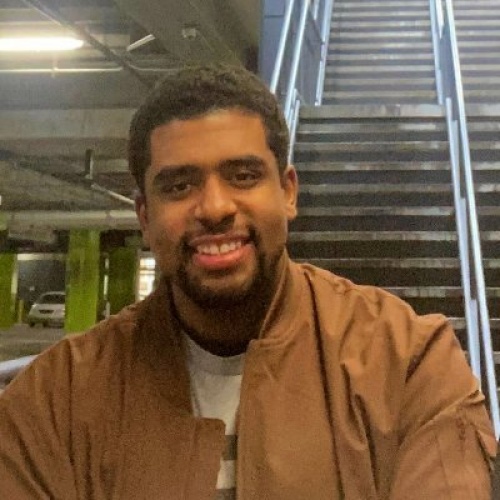
Benjamin Barber is the democracy program coordinator at the Institute for Southern Studies.