Can Texas go blue? A conversation with historian Max Krochmal
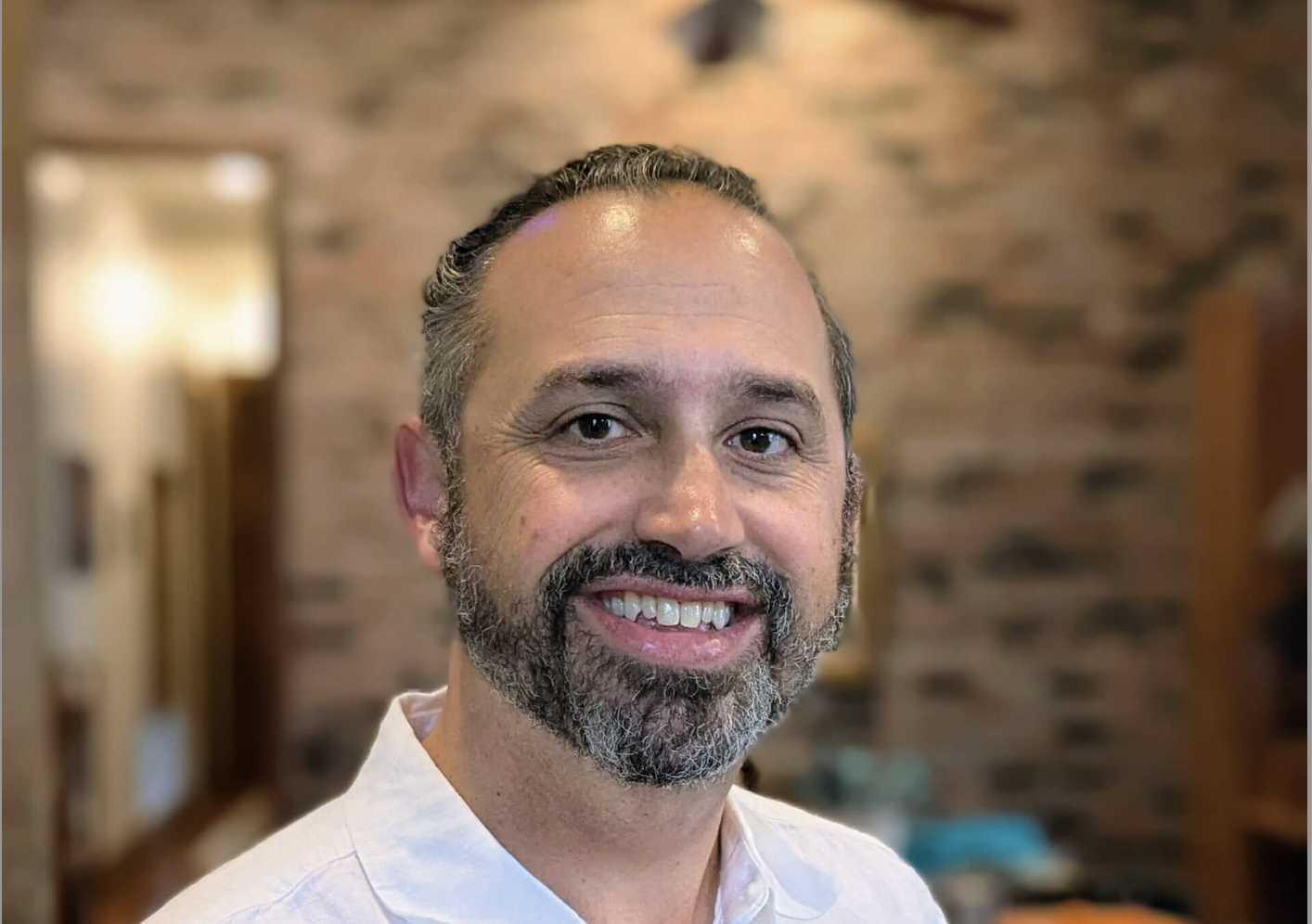
Prof. Max Krochmal teaches U.S. history, justice studies, and urban studies at Louisiana State University in New Orleans, and is the author of Blue Texas: The Making of a Multiracial Democratic Coalition in the Civil Rights Era (Photo: Labor and Working-Class History Association)
In Texas' primary elections this spring, Republican state Attorney General Ken Paxton won a run-off for a U.S. Senate seat by more than 27 points over incumbent Sen. John Cornyn. Paxton's long and sordid history of scandal and ethical lapses — and the victory of charismatic educator James Talarico in the Democratic primary — have progressives hoping they have a chance to win in Texas, a state President Trump won with more than 56% of the vote in 2024.
Despite its image today as a deep red state, Texas has a rich history of progressive organizing and politics. Ten years ago, Max Krochmal — now a Professor of History at Louisiana State University — published Blue Texas: The Making of a Multiracial Democratic Coalition in the Civil Rights Era, a pioneering look at the rise of an influential progressive coalition in the state beginning in the 1930s into the 1970s. At a labor-community organizing event in Charlotte, N.C. this spring — while the Texas primaries were still underway — Chris Kromm of Facing South talked with Krochmal about Texas' progressive history and lessons for today. This interview has been lightly edited for brevity and clarity.
Texas has a hidden history of multiracial, working-class organizing that might surprise people. Tell us some key moments in that history that are important for people to know.
There's a history of union organizing in Texas and across the South that we often discount, and also of civil rights organizing that goes way back before the 1960s. And in Texas, these were very much intertwined: both a Black freedom struggle, and a Mexican-American civil rights movement that were rooted in working people, and had moments in which labor unions played a critical role in their organizing.
There's different moments I could speak about, but I think the most important is when they come together in the 1960s in something that they call the Democratic Coalition. It's composed of Mexican-American community organizers, political activists, union people, African Americans in all those same categories, the predominantly white Texas AFL-CIO, and then a group of white "independent liberals," as they called themselves, that engaged in political action at the community level.
All these different groups spent decades organizing on their own and fighting separate struggles against Jim Crow and Juan Crow, and the [military contractor] Brown and Root Company and some of the other big contractors. And of course the conservative Dixiecrat leaders of Texas. But over the course of the 1950s in particular, they started getting closer, as they experimented with talking to one another and were forced together in self-defense. And they built a political alliance that was both doing the work of registering and turning out voters, fighting at the polls, but also working together in the streets.
What were some of the accomplishments of that organizing?
I write in my book about the 1938 pecan sheller uprising in San Antonio, which had a multiracial coalition around it, and led to the election of Maury Maverick as a left-leaning liberal mayor of San Antonio. The coalition in an early form wasn't quite fully clicking yet, but they elected Ralph Yarborough to the United States Senate.
And then in the 1960s, coalition organizers, and people who later joined this coalition or helped to build it — people like GJ Sutton of San Antonio, or railroad worker Moses LeRoy of Houston — they were very much involved in the sit-in movement, in integrating their cities. They connected those youth-led movements with Black labor unions like the ILA (the Longshoremen's Union). And those unions provided critical support, bailing people out of jail when they got arrested doing sit-ins or providing funds through fundraisers for civil rights groups.
By the mid-1960s, this organization had led a major push to eliminate the poll tax in Texas. They're not successful immediately locally, but the organizing that they do means that, when the poll tax is repealed at the federal level, they're able to swing into action, because they had already been doing get-out-the-vote work. They did a tremendous amount of leadership development. They built a block worker program with some 10,000 volunteers involved all over the state.
And those people went on to win elections in the state legislature, to local city councils and county commissions — and they completely transformed the politics of Texas. They ended the worst of Jim Crow segregation and of Juan Crow segregation. And they turned the cities blue eventually: They made this map where we have an archipelago of blue cities surrounded by the red countryside.
And they broke down the doors of the Democratic Party that didn't want them, and they transformed it into an organization that was multiracial and committed to both labor and civil rights.
What happened to these efforts?
There are different things that happened. In the mid-1960s in Texas and everywhere, we begin to see some of the limitations of the civil rights movements, both the Black freedom struggle and the longer Mexican-American civil rights movement. The push for integration and for inclusion within the framework of liberal politics in America was proving inadequate for those communities. And people began searching for other ways to organize.
That took the shape of another round of youth-led organizing: the Chicano movement, the Black Power movement. A new wave of organizing within unions, inspired by those radical movements, as well as the anti-war left as it became more and more radical over the years. What they exposed was that the liberal integrationism that Lyndon Johnson advocated by the end of his political career, the promise that if they just did their part they could get their piece of the pie in America, wasn't true. And it wasn't true because of white resistance.
And the conservatives found new ways to organize. In Texas, after having locked out Black and Latino voters and political aspirants and organizers for decades, the center- and right-wings of the Democratic Party begin actively recruiting Black and Latino candidates. They do their own kind of conservative coalitions that are tokenistic, that aren't really speaking to the deeper economic needs of those communities.
And generally, there's this backlash against civil rights. And that wasn't new. But after the 1960s, they gained steam. The court cases that create space for the civil rights movement are reversed. We all know about Brown vs. Board opening up public schooling. We're here in Charlotte now where a Mecklenburg case created two-way busing as a solution to school inequality. But it was just a couple years after that that the San Antonio v. Rodriguez case was decided, that said that suburban school districts could keep their own money and didn't have to share with [urban districts]. That encouraged more white flight and encouraged more resistance.
So the civil rights movements hit a wall. And then, internally within the coalition, that led to conflict. Sometimes it led to conflict between Blacks and Latinos. But more commonly it led to white liberals getting kind of scared and retreating. And so it's taken us a long time to rebuild from all that.
Today, progressives struggle to make the case that a more just and democratic future is possible in Texas. Every few years there seems to be a burst of enthusiasm; you're seeing that this year with the U.S. Senate race. What do you think this history tells us about what's possible in a state like Texas?
I think history offers a few really important lessons. One is that these struggles existed at all, and that people did find ways of crossing racial lines and resolving their differences by openly discussing them. By working together, recognizing that they were different and had different priorities, spoke different languages, lived in different neighborhoods, practiced different religions, what have you. But they found ways to nonetheless say what are our collective goals that we can work on together.
One way they did that was by people of relative privilege being able to understand why special attention needed to be paid to some of the most targeted members of their organizations or coalitions. So when the white liberals finally stopped talking about gradualism and began to embrace the push for immediate integration without compromise, suddenly they were able to build an alliance that was much deeper than anything they had attempted before.
And I think that played out in the political arena as well, that when they tried to moderate their appeals to the electorate and do something that they viewed as "electable" or centrist, they found they didn't have anyone who wanted that. And so instead when they ran to the left, when they organized all of the different bases of their potential coalition, people got enthusiastic and turned out and volunteered for them and donated and worked and voted. So both the social movements and the political organizing were at their most successful when they were most committed to an expansive vision of racial and economic justice. And by today's standards, we would add gender and sexual minorities and people with disabilities and other groups.
We have now a New Jim Crow, that Michelle Alexander and many others have written about, a caste system that's rooted in the criminal legal system and the process of mass incarceration. We also have a new Juan Crow, it's rooted in those same systems but also in the immigrant detention system, the militarization of the border, all of these things.
So I think if progressives want to make any progress in the United States today, and in the South included, white progressives need to be comfortable prioritizing issues like police brutality, like mass incarceration, like immigration rights, like LGBTQ rights. And if we do that, we're going to be able to again organize many bases, and build a coalition that can produce power.
Tags

Chris Kromm
Chris Kromm is executive director of the Institute for Southern Studies and publisher of the Institute's online magazine, Facing South.