Report: Durham's decade of growth has left working people behind
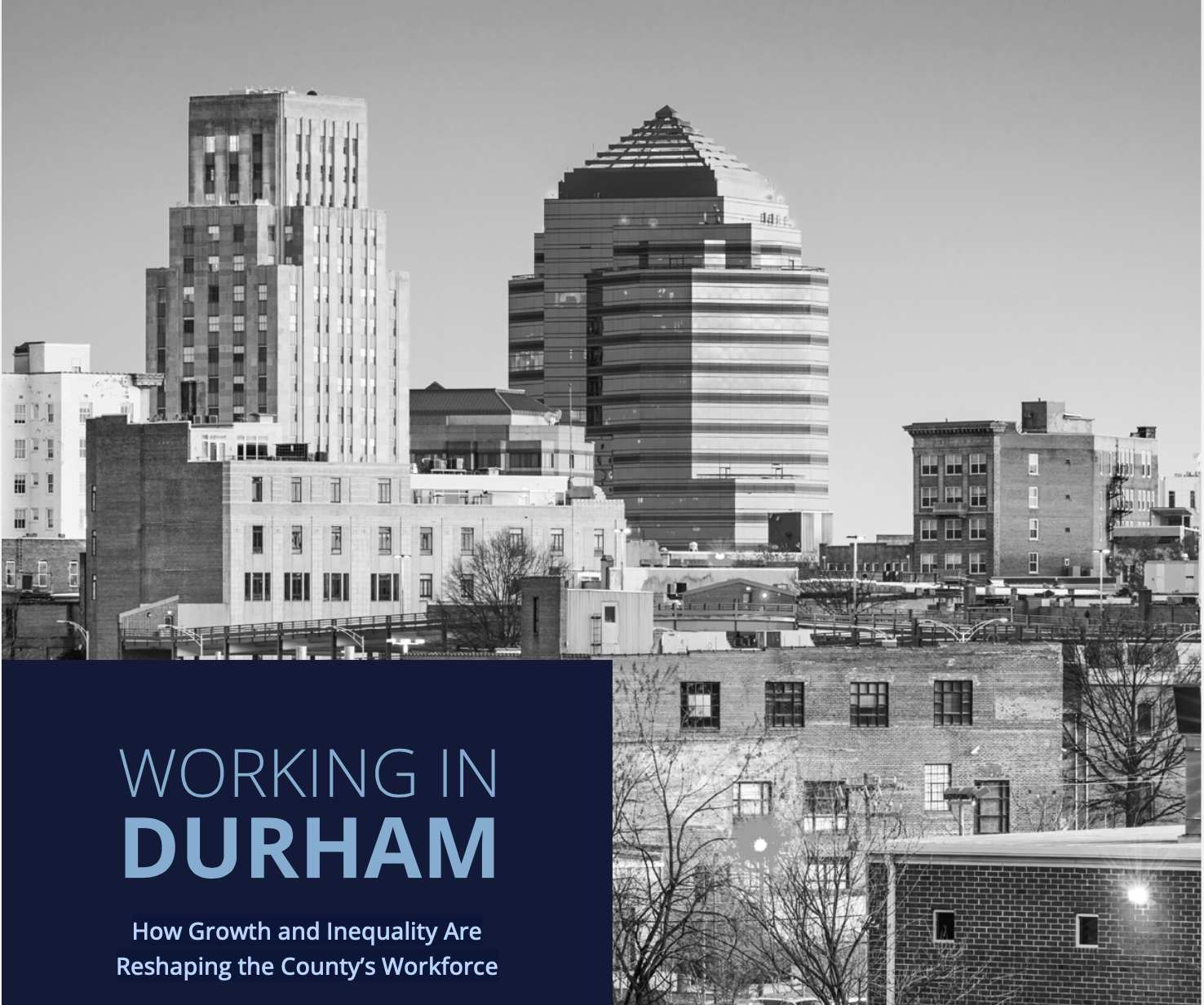
A new report from the Institute for Southern Studies, publisher of Facing South, finds that the economic growth in Durham, North Carolina over the last decade has not reached all of the workers who power the city and its largest employer, Duke University. In fact, the report finds that the gap between Black and white workers has grown wider during Durham’s decade of growth
The report, “Working in Durham,” documents how the last 10 years have seen an influx of wealth to Durham County due to a sweeping regional tech and biotechnology expansion and the massive footprint of leading employers including Duke University and Duke Health.
Yet the benefits of these expansions and new profits have failed to reach Durham’s workers. The report finds that households earning $200,000 or more went from 2.7% of Durham County taxpayers holding about one-fifth of reported income in 2010, to 8.5% of filers holding 40% of reported income by 2022.
In other words, Durham's economy is growing, but more income is flowing to the top.
“Working and living in Durham is a paycheck-to-paycheck struggle. I love my city but working here and living here is not adding up,” said Ieisha Francis, a Certified Nursing Assistant at an assisted living facility in Durham, N.C. who is profiled in the report. “There’s constant building up in this city, but there’s nothing being built that I can afford. I can tell the people investing in Durham are not invested in our community.”
The report also finds:
* Median household income in Durham County has climbed from roughly $52,000 in 2014 to $79,500 in 2023.
* Between 2014 and 2023, the median gross rent in Durham County climbed from $877 to $1,415. This represents a real-dollar increase of 25%.
* In 2014, Black workers in Durham earned 72.5 cents for every dollar earned by white workers. By 2023, that figure had fallen to 62.2 cents.
* The median hourly wage among Black workers in Durham went essentially nowhere, from $20.97 in 2014 to $20.59 in 2023.
* The share of Black workers holding low-wage jobs climbed from 31.7% in 2014 to 39.3% in 2023.
* The median hourly wage among Latino workers in Durham went from $14.87 in 2014 to just $18.26 in 2023. Only about half of employed Latino workers in Durham have health insurance.
Duke is a driver of Durham’s divide
According to the report, roughly one in five low-wage Black workers in Durham were employed in health care and social assistance, a finding that is consistent in both 2014 and 2023. Duke Health remains the major player in Durham’s health care industry. It plays an outsized role in shaping wages and benefits for the Black workers in Durham who work in the hospital as nurses, receptionists, housekeepers, food service workers, and more.
Although Durham’s economy grew significantly, the share of Black households enrolled in public assistance programs like SNAP and Medicaid stayed largely the same between 2014 and 2023. This finding shows that Durham’s economic boom has not lifted Black workers up, but maintained a status quo of low-wage, low-benefit work.
“We deserve more than we’re getting,” said Nah’Shon Blount, a housekeeper at Duke. “Even with a $20 minimum wage now, it’s still not enough. We need so much more to be able to keep living in Durham.”
Durham’s anchor employers can close the gap
Duke and other anchor employers are more than passive beneficiaries of Durham’s recent economic growth. As a major employer of low-wage workers, Duke University and Duke Health play a key role in shaping median wages, household incomes and access to benefits in Durham.
“Closing the gap will require Durham’s largest employers to change how they value workers,” the report’s authors write. “Duke University and the private companies driving Durham’s growth must treat job quality for Black and Latino workers as a central responsibility.”
Visit here for a PDF of the full Working in Durham report.
Tags

Chris Kromm
Chris Kromm is executive director of the Institute for Southern Studies and publisher of the Institute's online magazine, Facing South.