Labor is at the heart of the Black Freedom Struggle: A conversation with Charles McKinney
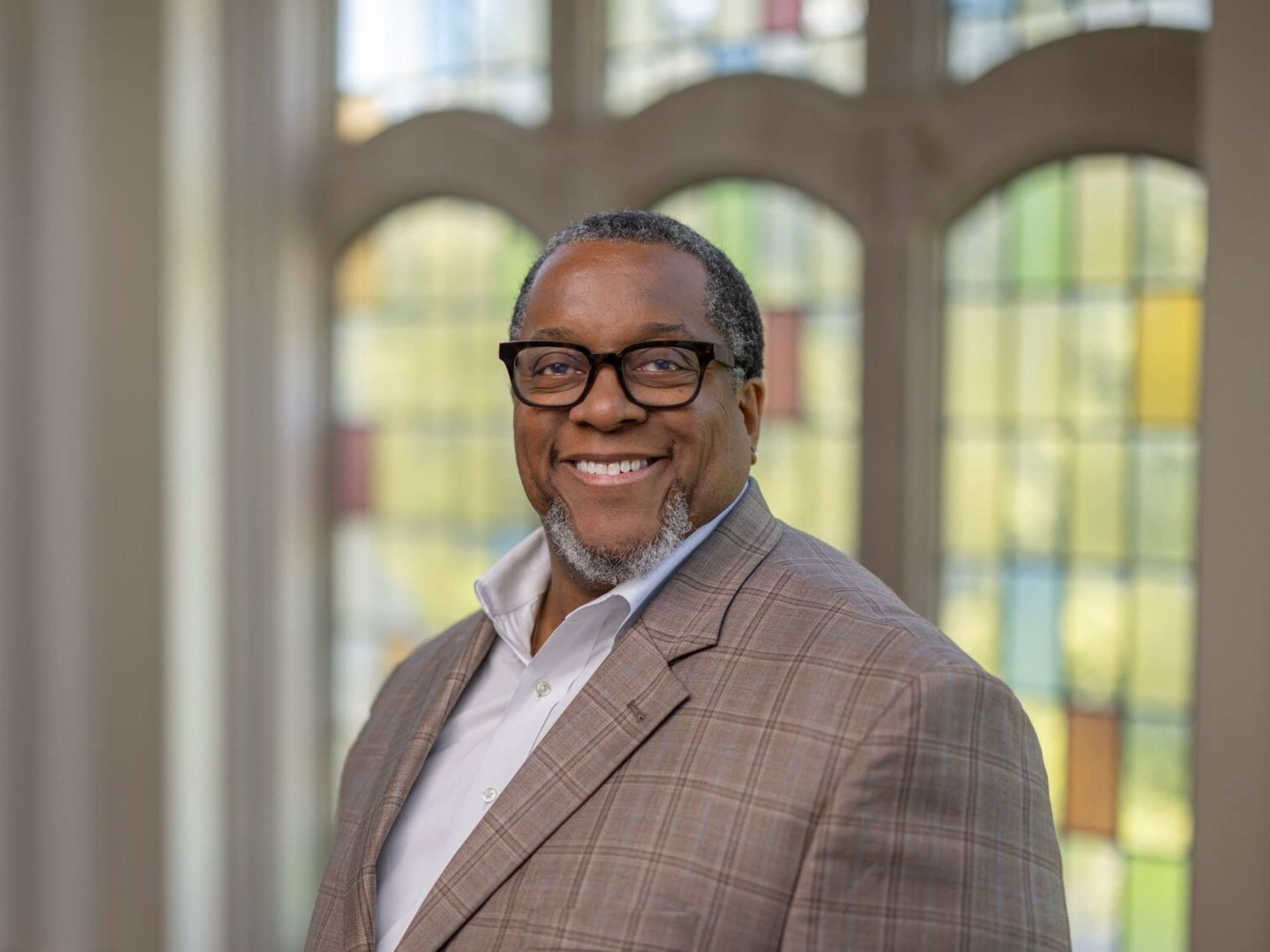
Prof. Charles McKinney, who teaches at Rhodes College in Memphis, Tennessee, is a leading scholar of Black social movements in the United States. (Photo: Rhodes College)
Dr. Charles McKinney is a professor of History and African Studies at Rhodes College in Memphis, Tennessee. Dr. McKinney has written and lectured widely on social movements in the South, with a focus on the Civil Rights Movement and its role in ongoing struggles in Black communities for social and economic justice. Among his many volunteer and community activities, he was a board member of the Institute for Southern Studies, publisher of Facing South, in the late 1990s.
In July 2026, McKinney delivered a keynote address at a gathering in Greensboro, North Carolina of Workers to Workers North Carolina, an organizing initiative led by the union UNITE HERE that brings together unions and community groups. At the conference, Chris Kromm, executive director of the Institute for Southern Studies, talked with Dr. McKinney about themes from his speech including the role of labor in social movements, and the importance of history in today’s dangerous political environment. The following is lightly edited for brevity and clarity.
We're at the Workers to Workers conference. Today you talked about the central role labor played in movements like the Black Freedom Struggle and civil rights. Can you talk a little bit about [that]?
One of the things we need to think about is, when we're talking about rights — freedom rights, the Black Freedom Struggle, civil rights, and then going back to the years after emancipation — at the heart of that struggle is a struggle for labor, a struggle for economic autonomy, a struggle for Black folk to be able to work for a fair wage, to be able to work and be paid for their labor. Enslaved people aren't getting paid for their labor. So the fight to be paid for labor, the fight to enjoy labor autonomy, the fight to be able to say, “I'm gonna work here and not here. This is the wage that I want. If I don't get that wage, then I'm moving on,” so on.
And so at the center of the Black Freedom Struggle is a struggle around labor. It's a struggle around self-determination, and so much of that is a function of labor.
So when we go through history and touch on all the major touchstone areas of the Black Freedom Struggle — the years after slavery, emancipation, the Great Migration, the fight against segregation from the late nineteenth century on through the first half of the twentieth century, the civil rights struggle, the Black Power movement, so on—when we peel the layers back, labor lies at the heart of that.
We see people who are traversing both worlds, the labor world as well as the civil rights world. A. Philip Randolph, Brotherhood of Sleeping Car Porters, organized in the 1930s — a massive entity when it comes to both labor and civil rights. E. D. Nixon, another member of the Brotherhood of Sleeping Car Porters in Montgomery, Alabama, who's one of the chief strategists of the Montgomery Bus Boycott. Martin King coming to Memphis in 1968 to support who? Sanitation workers, and their fight for the recognition of their union.
So again, thinking about labor, thinking about all of the ways that labor interfaces with all of these other issues including housing, education, health care, and so on. It's really easy for us to compartmentalize these two things, but when we really think about it, we should start to see those two movements, when we say labor and civil rights, as very concentric realities.
The assaults on labor really were working hand in hand with the white supremacist forces, especially in the South. What is important for us to understand about that?
Moments of labor suppression, moments where forces come together to deny working people their basic rights, to deny working people access to fair wages, to health care, to deny them the opportunity to live as fully realized humans — all of that work is rooted in the work of oppression, the work of suppression.
All of that has its moorings, has its anchors, in a labor relationship, and frankly, a master-slave relationship, right? Where the ownership class says, "Look, we know what's best for you, and what's best for you is my best interests. What's best for you is I make all of the money and you get scraps. What's best for you is you live and die based on my whims."
So the segregationist imperative lies at the heart of anti-union work because union work is about self-determination. Union work is about trying to build a society where people can be fully realized human beings, and can live in the fullness of their humanity.
And so the forces arrayed against that have to dress themselves up in all manner of ways. “We're for prosperity. We're for ‘right-to-work.’” But at the end of the day, they are about division and subjugation. They are about taking us back to an age where it doesn't matter whether or not you can afford to feed your family. It doesn't matter whether or not you have affordable health care. It doesn't matter whether or not you can afford child care. You work until you die, and then when you die, we will replace you with another worker.
This is the blueprint literally written by slavery. We will work you to death and when you die, we will purchase somebody else to take your place.
What lessons do you see from the history of that connected organizing that we can bring to this moment?
History teaches us that in moments of democratic possibility, in moments where we see an expansion of the fight for rights, for self-determination, for human rights, for civil rights, economic rights, immigration rights — when we see multiracial, cross-issue, when we see a burgeoning of those movements — that's when we see the backlash.
We saw this in the early part of the twentieth century, we saw this in the civil rights period, the Black Power period, so on.
You see the assaults on all of the constituent parts of that movement. Now we're in a moment where immigration has been framed as, look, they're stealing our jobs and these people are violent criminals. It's the otherization of Black and brown workers, of Black and brown people who are trying to make a way for themselves in this society. We see this in the early part of the twentieth century, too. The Chinese Exclusion Act — “Hey, the foreigners, they don't share our values, they don't share our beliefs. They're going to destroy our system, and they want our white women."
That's always been a key component of the backlash. We see the assaults on DEI, where just anybody who's not white and male is a problem. So we see this metastasizing and cascading — literally stifling the free speech of public school teachers and professors at public colleges and universities, stopping them from teaching, or taking a whole bunch of their tools off the table, to be able to teach the history of racial inequality, history of gender inequality, history of white supremacy, and so on.
And so we see these multiple fronts working now in real time to push back against the gains made by the labor movement, made by the Black Lives Matter movement, made by the Fight for Fifteen, made by immigrant rights groups. It was a small piece of work that we saw unfurling in and around 2015, 2020, culminating in the George Floyd protests. But it was small. And now we're in this moment of backlash [with] violent reprisals against these very tentative moves. But we gotta continue to struggle and build momentum and build a movement.
What do you see as some of the biggest dangers of this attack on understanding our history? And how do you see a way forward in terms of how we deal with this situation and push forward?
That's a great question. I mean, this is an elevated attack.
This is an attack that has been encoded in state law in so many states. These divisive concepts and laws that have been passed, like here in North Carolina and Tennessee, where it's made it incredibly hard for teachers to teach about things that make up the constituent parts of our history. And so that coordinated assault from state legislatures on up to the White House — the assault on the Smithsonian and public monuments and the National Park Service and so on.
And one of my questions, one of my concerns is the extent to which future presidential administrations will try to unwind this work. Or whether they sort of capitulate and say, “Okay, well, this is the new normal.” So that's one of the things that keeps me up at night: Post-this moment, post-Trump, what does repair look like?
The other really powerful reminder that I give people, particularly when it comes to African American history — I tell this to African American civic groups all the time — is, if you could build a time machine and go back a century, go back to 1926, right, and tell Black folk living anywhere — New York, Durham, Memphis, Charlotte, New Orleans, wherever — tell those Black folk that the sole institution responsible for teaching your children Black history would be the public schools, they would look at you like you were crazy.
What do you mean the public schools are the sole entity where we learn about our history? What are you talking about? That's what churches are for. That's what civic organizations are for. That's what the Divine Nine, that's what fraternities and sororities, that's one of the things that they do, right?
The African American civic universe is tasked with the assignment for education. When Carter G. Woodson created the Association for the Study of Negro Life and History, which is now African American Life and History, some of those chapters were based in colleges and universities, but the vast majority of those chapters are based in the community. The chapter in Jacksonville, Florida, there's no college associated with that chapter. There's no college associated with the chapter in Memphis, where I live. These are community organizations. Community folk who say, yes, this history matters. And we've got to create our own independent vehicles to make sure that this history is preserved, and to make sure it's taught and replicated and sent out to everybody, young people in particular.
So part of our challenge, part of our opportunity in this moment, is to figure out what are the alternative spaces where we can teach our history. History is under assault. Particular types of history are under assault in this country. And that's not hyperbole. That's not hypothetical.
This is happening in real time. In the state of Kentucky now, you can go to the Association for the Study of African American Life and History national conference as an academic, but your institution will not pay for you to go. The largest national organization dedicated to the study of African American history, is being decertified by the state of Kentucky. It's absurd.
So what are we to do in this moment? Well, again, let's go back to what we used to do. If we're serious about the history of Black struggle, the history of labor struggles, if we're serious about the ways in which this history can shape and inform our current moment, then we've got to figure out what our alternative venues are. To make sure that people get access to the history that they need so they can be, again, fully-informed individuals, fully-informed citizens, fully-informed human beings, to make the best possible choices about the lives that they want to lead in this country.
Tags

Chris Kromm
Chris Kromm is executive director of the Institute for Southern Studies and publisher of the Institute's online magazine, Facing South.