Tram Nguyen on what's next for progressives in Virginia
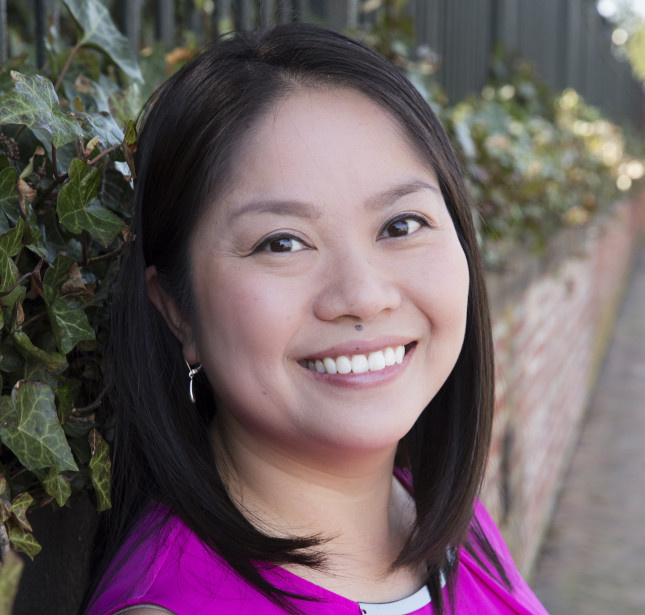
Tram Nguyen is co-executive director of New Virginia Majority, a group founded in 2007 to organizing working-class and people of color communities for racial, economic, and environmental justice. (Photo: New Virginia Majority)
In the 2025 elections, progressives scored impressive victories in Virginia. Voters moved overwhelmingly to the left across the state, leading to significant wins for Democrats in races for governor, lieutenant governor, and attorney general. Progressives also expanded their majorities in the General Assembly, growing their margin in the House from a narrow 51-49 majority before the elections to a 64-36 seat advantage after Election Day. (The state Senate didn’t hold elections this year.)
Chris Kromm with Facing South and the Institute for Southern Studies talked with Tram Nguyen, co-executive director of New Virginia Majority, about her takeaways from the Virginia elections and how progressives can deliver on their promises to tackle affordability and other key issues. Founded in 2007, New Virginia Majority organizes in working-class, people of color communities across Virginia. This interview has been lightly edited for clarity and brevity. You can watch the full video of our interview on the Institute's YouTube channel here.
* * *
First of all, tell us about New Virginia Majority and your work in the state.
New Virginia Majority is a statewide civic engagement, grassroots, base-building, advocacy organization. We do a mix of everything, but at the heart of the organization is making sure that we are building power for working-class communities of color.
If we can build power for communities that are typically underrepresented, marginalized, left on the sidelines, and we really put their issues and the things that they're facing front and center — and actually have leaders address those issues as we're building power and doing accountability work then we will have fundamentally changed the system in Virginia and really improve people's quality of life.
What to you are the most important takeaways from the 2025 elections in Virginia?
I don't think it'll surprise you or anybody, that when people think about what matters to them and given the current environment that we are in, I think that they are very much focused on their their livelihoods. We saw it across the board, from the top of the ticket all the way down to even local races, that affordability and cost of living and making sure that people can stay and live in their home safely and securely [were top issues]. Without fear of whether or not they're gonna have a roof over their head, if they could put food on the table, if their kids can go to school without fear.
It's not rocket science, but at the same time it's really unfathomable to me sometimes that these things that are so seemingly basic are not being addressed in America. And so cost of living, affordability, whether it's housing, healthcare, education, et cetera, were top of mind.
Every candidate ran on that with such discipline and rigor. That's the mandate that these incoming elected officials are going to have going into January when they all get sworn in. And we're excited about that because that means that we can pass things like paid family and medical leave, and increase the minimum wage, and take care of a lot of things that are going to help working families.
You just segued right into the next question, which is: Now that you do have this trifecta and you have some real space to do the things that you want to do, tell us more about what you think will be the most important issues for lawmakers to tackle in 2026?
I think the mandate coming from these elections is affordability. To really think about how we are easing the burden on people's lives. And with House Bill 1 coming down from the federal government and the impact, for example, on health care and health care premiums, there are hundreds of thousands of Virginians that are at [risk] of essentially losing their health care. And there are communities, entire communities in parts of Virginia that the closest hospital is four or five hours away. Healthcare access is front and center.
Making sure that when there is something catastrophic or some health need in a family that people can take time off to take care of themselves or their loved ones. And so as I mentioned before, paid family medical leave has been something that, with a number of our coalition partners, we've working with them on for years. And we're very excited to be able to start making progress on a lot of these things.
I could go down a laundry list, Chris, of things that I think we're excited to get done in year one. I mean, the other area that I think is really critical is voting rights in our democracy. And what we're seeing right now in this country, that this country is clearly backsliding on democracy, frankly. And so there's a lot at stake.
And so are there some things that we can do in Virginia to really shore up our voting rights and make sure that we continue to have free and fair elections. We know that the Supreme Court is going to gut the Voting Rights Act again. And so one of my top priorities this year is how do we strengthen the Virginia Voting Rights Act. We were the first state in the South to pass a state Voting Rights Act. We used to have one of the strongest ones. Other states have surpassed us, like New York, and now I'm like, no, my turn to catch right back up!
And then I'd be remiss if I don't mention immigration, doing things to protect our immigrant communities. That is a big part of our base. And, you know, the community is under attack. They are living in fear every day of what's going to happen when they send their kids to school. And so can we think about some protections that we can put in place to make sure that our immigrant brothers and sisters actually are able to live and thrive in our communities as well.
Winning elections takes organizing, and advancing a policy agenda takes organizing. Can you talk a little more about what New Virginia Majority does and what are some of the insights that you've gained about what it takes to win and have an effective organizing program?
I think it's about showing up. It really is about showing up and building trust in communities. We have been doing this work in Virginia for about 18 years. And so when we show up in a community and we're saying, hey, this election is really important, we need to get out and vote, and we articulate why, and we're having real dialogue with folks about what's at stake, they understand that fundamentally.
And they know that after November, our work isn't finished. So what happens next? We start working with legislators to say, hey, can you introduce this bill that's going to address this issue that's been going on in our communities that our members, our leaders have been trying to address for many, many years? They'll introduce the bill. And then our members are showing up in the General Assembly session and they're telling their stories, powerful stories that you can't refute.
Our member leaders are an integral part of the advocacy work that we're doing. We're not doing the work for them; we are doing the work with them. Folks have a real sense of ownership over it. Our members identify the issues that we work on, what we're going to advocate for, what type of policies we want to get introduced, what candidates we endorse. They have a say in all of it because it's really about them and the base and having power for the base.
You mentioned the [state] Voting Rights Act, which was historic when Virginia passed that [in 2021]. That was a top priority to have a law that could be used to advance voting rights and democratic access in Virginia. You said now you want to strengthen it. As you look to 2026, what are some lessons you have for how you're going to move things forward?
Yes, conversations started a lot earlier [laughs]. I think we were so excited the last time around [when there was a Democratic trifecta in 2019-2021], and there were so many bills that had just been in the queue or we've been fighting for for so long. And it was a short legislative session.
We should have started talking earlier about, "We're going to pass this great thing, but do we think about how it's going to get implemented? Did we draft it in such a way that it makes it easy for state government, for agencies to implement?"
So this time around, we want to make sure that any bill that gets introduced in January in the General Assembly is ready for prime time. We're not going to go through too many amendments in committee and the sausage-making. We just have to make sure that things are in as good a place as possible so that we can really focus our battles where they need to be focused. I think that is a big lesson.
And also to not be afraid to think big and bold, in terms of what we're trying to do. And to continue to figure out how we can center our members in the decision-making process in terms of what bills get prioritized, what bills we want to advance.
Lots of lessons learned, but we're excited. We're in a good place. I'm excited for January 14th, when session starts to roll around, and January 17th when the statewide candidates get sworn in to office. It's going to feel like a new day.
One of the challenges or opportunities of having a broad coalition like the one you work with, there are so many different issues that you can move on. One that is interesting, would this be the year that the “right-to-work” law would be challenged in Virginia?
That's part of the need to have very early conversations to make sure folks are all on the same page. I know a bill has been introduced around repealing right-to-work. I think the challenge is that Governor Abigail Spanberger has mentioned that she does not support a full repeal of right-to-work, that she would be willing to take a look at it and figure out what can be done, but full repeal is not necessarily one of her priorities at the moment.
But I think that speaks to the need for us to collectively continue to build power for our communities, and really think about what what it would take to build out a public-facing campaign to repeal right-to-work, to actually create the conditions so that it's not just an inside game where groups are lobbying, but there is public accountability and general public demand beyond labor unions for repeal of right-to-work. And we're happy and excited to work with our labor unions and friends to think that through and see what can be done.
Virginia is the only state in the South with progressive majorities in their state legislature, and it's been a long road to get to this point. There was the [Democratic] trifecta, then that was reversed, and now you've brought it back. What is your message to other Southern States that want to be the next Virginia and want to shift power at the state level?
I think you have to fight for every inch you can get, and continue to fight and hold on to any gains you have. There's going to be setbacks along the way, but I don't think any place is unwinnable forever.
When we first started doing this work, people across the country looked at Virginia and they said the same thing. You're insane. Like, it's the South, right? It's the former capital of the Confederacy. Virginia went blue for Obama in 2008, but that was an anomaly, right? In 2009, Democrats lost across the board in Virginia.
If we really mean it when we say we need to build power for our communities, then we have to be willing to put in the work over the long haul, right? Movement work is messy. Movement work is long.
But don't give up because I don't think any place is unwinnable forever. We have the conditions. People are generally aligned with us on our side. We just have to give them political homes and this space for them to be seen and to be heard, and to feel like they can build power collectively. Because once that energy is there, I think it just continues to build and build.
Thank you so much. We're going to be watching closely what happens for Virginia and look forward to hearing from you about how things are going. Anything else you'd like people to know?
Yes, maybe post-legislative session we can do another interview and I can go through, here are all our victories and this too can happen in other places. But we have to start somewhere.
Tags

Chris Kromm
Chris Kromm is executive director of the Institute for Southern Studies and publisher of the Institute's online magazine, Facing South.